I couldn't agree more with your argument. I especially think you make a strong and logical point regarding the lack of relation between human physiology and animal physiology. Surely the differences between species makes any test results inaccurate, redundant and therefore pointless. A Fascinating Read.
Abortion seems to be an issue with much complexity. With debatable points on both sides that can raise further questions regarding contraception/birth control, vasectomies, rape, adoption. An interesting topic, I look forward to reading more.
An interesting choice of topic which raises many questions. Like Should fast food giants like McDonalds and Burger King be obliged to help combat childhood obesity? Should there be more education in schools regarding healthy eating? Does the responsibility fall completely on the parents? Are the ethical standards within the advertising industry strong enough and clear enough?
Yes, a very original topic. Will be interesting to see what evidence there is to support this argument, and also if perhaps the same depression is evident across all social media or just Facebook.
This is a great clip, cleverly bringing to our attention the kind of obsessive and addictive effects social media can have. Often our virtual lives appear to be overtaking the real ones.
“The form of law which I propose would be as follows: In a state which is desirous of being saved from the greatest of all plagues—not faction, but rather distraction—there should exist among the citizens neither extreme poverty nor, again, excessive wealth, for both are productive of great evil ... Now the legislator should determine what is to be the limit of poverty or of wealth.”
The Early Days While growing up, New
Zealand gave the impression that it had a moral and honest society, and its people seemed to have a reputation
for being innovative, laid back and most importantly fair- we even
had, and still do have, a consumer rights show called 'Fair Go'. It appears that during
my 28 years, the problems that our society face both economically and
socially, have gradually gotten worse. Many have found that our social and economic problems are linked with the levels of inequality in our
country and the failure of Neo-liberalism.
Establishing
In 2011 a report by
Bill Rosenberg- Policy Director and Economist for the New Zealand
Council of Trade Unions, came out, titled: "Inequality in New Zealand - How Bad? Does it matter? What can we do about it?”.
This report included evidence that New Zealand is one of the most
unequal countries in the high income world.
ONE
OF THE MOST UNEQUAL COUNTRIES IN THE HIGH INCOME WORLD
Gini
coefficient – measure of inequality
0
= Everyone equal, 100 = One persone has all the income
This graph in Rosenburg's report, which he obtained from the
Organisation for Economic Co-operation and Development (OECD), shows
that New Zealand had the fastest rising income inequality in the OECD
in the 1980s and 1990s. The report also went on to claim that currently, New Zealand has around the 10th
highest income inequality out of 34 countries in the OECD.
These alarming statistics show that inequality is at a high level in New Zealand, especially compared with fellow OECD countries. Going Backwards To be able to understand why New Zealand has such a high level of inequality, it is essential to identify when the gap between the rich and poor, began to grow at such a rapid rate and considering the above statistical graph, it is fair to say this rapid rate took off in the 1980's. In 1984, The David Lange led Labour Government introduced major changes to NZ's economic and social policies as a result of the large government debt, which had been accumulated under the previous Government, that being Robert Muldoon's National Party. These changes could be identified as neo-liberal policies. Policies that could at the same time, be seen in the United States under Ronald Regan, and in United Kingdom under Margaret Thatcher . These changes were, er..."sold" by treasury through a report to the then Minister of Finance, Roger Douglas who resultingly became the face of Neo-liberalism in NZ. These radical changes became forever known as "Rogernomics". Changes included free market reforms, the corporatising many government departments with a look towards privatising them, the removing of farming subsidies, and the selling of state assets, such as 'Air New Zealand', while dramatically reducing the Governments role and size. As a result of these changes the stock market soared and property speculation rose. While the implementing of neo-liberal ideas such as privatisation, deregulation and trickle-down admittedly did bring prosperity for the rich, the rest, that being the majority, found themselves floundering. Large rises in unemployment occured and also the shrinking of the size, impact and influence of the state, saw many lose their livelihoods.
"The
rich run a global system that allows them to accumulate capital and
pay the lowest possible price for labour. The freedom that results
applies only to them. The many simply have to work harder, in
conditions that grow ever more insecure, to enrich the few.
Democratic politics, which purports to enrich the many, is actually
in the pocket of those bankers, media barons and other moguls who run
and own everything".
― Charles Moore (English journalist and authorised biographer of Margaret Thatcher).
Health
An article by John Minto, titledInequality linked to social problems, refers to a Victoria University held forum on inequality and social problems, where they examined and investigated the thesis of a book called 'The Spirit Level: Why More Equal Societies Almost Always Do Better' by English academics Richard Wilkinson and Kate Pickett. During this forum, Otago University’s public health Professor, Philippa Howden-Chapman spoke of how the infant mortality rate in New Zealand before the mid-1980s was at a similar level to Denmark, but was now, almost twice as high as the Scandinavian country. She also said : "the period when our income inequality started to rise very rapidly ... [has] ...a strong association with the way this terrible disease took off in New Zealand. It should not occur in a developed country."
The article also says "(Howden-Chapman) suggested the rise was due to families becoming poorer and moving into smaller and more crowded housing where infectious diseases such as meningococcal spread more rapidly".
Minto goes on to say that the man administering the forum was Victoria University’s Head of Policy Jonathan Boston and Minto quotes him saying: "My personal view is that we can have some confidence that more equal societies - other things being equal - have better social outcomes across a range of measures. It may not be absolutely conclusive, but I think it's reasonably persuasive."
The essence of Johnathan Boston's conclusion, that being: more equal societies have better social outcomes, echos the soul of Wilkinson and Pickett's book, where the above graph comes from, and this echo is growing louder too. The stream flows up
I recently saw a new documentary made by the award-winning Bryan Bruce, the man behind 2011's 'Inside Child Poverty' documentary. Bruce's new 'INSIDE NEW ZEALAND' documentary 'MIND THE GAP - A SPECIAL REPORT ON INEQUALITY' aired on tv3 in New Zealand in August 2013. It identified, not just that New Zealand had a large level of inequality, but that greater equality makes societies stronger. The documentary also showed how the large level of inequality in NZ affects not just both ends of the financial spectrum, the rich and the poor, but everyone in between too. One Neo-liberalist idea that has caused such high inequality in New Zealand is the concept of "Trickle Down". Intended to make things better for all of us, "Trickle Down" simply hasn't worked out that way. Instead of tax breaks to the wealthy eventually trickling down to everyone else, through investing and creating more jobs, the opposite ("Trickle Up") seems to have happened. The video below is an excerpt from 'MIND THE GAP', where documentarian Bryan Bruce interviews three professors on "Trickle down": Prof. John Quiggan from the University of Queensland, Prof. Ha-Joon Chang from Cambridge University, and Prof. Robert Wade from the London School of Economics.
The Neo-liberal policies in New Zealand which began with "Rogernomics" in the 80's, are still in force today. With levels of inequality continuing to rise because of them, so do our social and economic problems. Even David Lange, the Prime Minister that oversaw the implementing of Neo-liberal policies, later reflected on them in 1996. He said: "For people who don't want the government in their lives, Rogernomics has been a bonanza, but for people who are disabled, limited, resource-less, uneducated, it has been a tragedy". It is clear different ideas are needed to combat such problems. Possible solutions such as theRobin Hood Tax, Capital Gains Tax and also Co-Operative Businesses are positive and proactive suggestions that could give us all a chance to be better off. “The greatest country, the richest country, is not that which has the most capitalists, monopolists, immense grabbings, vast fortunes, with its sad, sad soil of extreme, degrading, damning poverty, but the land in which there are the most homesteads, freeholds — where wealth does not show such contrasts high and low, where all men have enough — a modest living— and no man is made possessor beyond the sane and beautiful necessities.”
(Opinion blog entry/article) Karl du Fresne and The Passionless People by LJ Holden http://www.republic.org.nz/blog/karl-du-fresne-and-passionless-people (Blog entry discussing Gordon McLauchlan's The Passionless People Revisited: New Zealanders in the 21st Century and Karl du Fresne's The current system works - end of story).
(Web info) Drinking patterns and social impacts http://www.teara.govt.nz/en/alcohol/page-5 (looks at the social impact of alcohol in NZ along with binge culture and action taken).
(Book) Phillips, Jock. A man’s country?: the image of the pakeha male, a history. Auckland: Penguin, 1996. (trace the history and shifts of how New Zealanders believe their white male members should act and think).
by Liam Fernandez.
Rick was woken by the call of a crow. A call that rattled his weary
bones. His first thoughts were of those who had become his friends. Good friends. Friends who hadn't
made it off the farm. Jimmy. Patricia. Both
gone. Andrea too. After refocusing to where he and the rest of the
group were, he lifted his heavy head to see Daryl patrolling the area.
Checking the
surroundings. Rick headed over to him.
'You should have woken me.' said Rick, rubbing the back of his neck. 'Looked like'ya needed the rest'. Daryl responded with his eyes
still fixed on the narrow highway, then the dense forest that
surrounded their makeshift camp. 'Yesterday was a long day for all of us. Even you Rick'. Rick changed the conversation. 'Well, we're low on fuel. Food and ammo too'. 'You wanna make a run?' 'That's what I'm thinkin'. The two of them started back to the group.
Rick
saw the rest of the survivors, now awake, were dusting the forest floor
off themselves. He told them of the plan he had just mentioned to
Daryl, and Glen kindly offered to join their search for supplies. Without
further delay, the three of them jumped in one of the cars and headed off. After
half an hour of so of driving, the highway they were on ended where
another crossed
it, forming a capital T. At the top of that T was a long-abandoned
truck-stop gas
station.
Once Rick and Glen had checked their pistols and
Daryl - loaded his
crossbow, they tactically and methodically checked the inside of the
dirt washed concrete station, like they had done on so many supply runs before.
All clear. After a thorough search they were only able to scavenge
three small bags of Jolly Rancher hard candy, two cans of coke and one
packet of Ritz crackers. No ammo. No fuel. Rick concluded this place
must have been raided previously.
Maybe a few times. Daryl and Glen agreed.
It was as
Rick was heading
back out front to their vehicle, when he heard a the distant rumbling of
metal. He halted to listen closely. As the curious noise
grew louder, and drew closer, Rick realised what was approaching.
Sharply turning, he scurried back inside the gas station. Bursting
through the door, he saw Daryl and Glen then barked somewhat under his
breath:
'GET DOWN NOW'! They both did without hesitation. 'Someone's coming?'
enquired Glen. Rick and Daryl both shushed him. The noise had now
reached the gas station and stopped. Peering out from behind the
counter, Rick, Daryl and Glen could now see two of three men
stepping out of a van which had stopped in the middle of the highway.
These intimidating two, both around six and a half feet tall, were
built
like professional athletes. Wearing identical overcast blue
jumpsuits and each had automatic rifles slung over their shoulders, and
were the kind of guys you wouldn't want to look directly in the eye.
Rick couldn't quite make
out what they were arguing over, until one blocking the open door to
the back-seat stepped away to show the third person. Everything in
Rick's chest sunk.
He could now see the third person was not a
comrade of the two armed men, but a prisoner of theirs. It was a young
girl in fact, sitting with her knees up to her chest and her back
against the far side door. Her hands, behind her back, were tied
together. Her feet, shoeless and bloody, were also bound. Her long
blonde hair, which once shone so brightly, was now drenched in sweat
and blood, dirt and fear. The very same kind that drenched the
blindfold which covered her eyes.
Seeing them arrive had made Rick uneasy, and seeing their cargo
had confirmed Rick's fears, while sending an sickening ache
through his veins. 'We have to help her!...Don't we?' said Glen. Rick, Daryl and Glen all peaked over the counter again. Now one of the man-mountains
was heading towards the gas station. Rick checked his weapon, to
count how many rounds he had left. 3. He could sense Daryl's anxiety
to “do something about these guys” was starting to get the better of him,
so he quickly darted his eyes towards Daryl's. Rick slowly shook his
head, while gesturing with his hand to his two allies as if to say:
“Wait, just let them pass”. Rick searched Daryl's face for a look
of consent but found none. Glen stole one more glance over the top
of the counter, and whispered the others an update.
'He's just checking the pumps... I don't think they're gonna come
inside...' whispered Glen. Daryl broke his silence. 'We have to take them out Rick!' 'They're not gonna find us here...' Rick sounded like he was
trying to convince himself as much as he was Daryl. '...and we can't
afford to use up the last of our ammo if we don't have to! Besides, the sound of the shots'll draw a hoard down on us!' 'Its not about the ammo any more! Or Walkers!' Daryl exclaimed. 'These guys
came from the opposite direction to us, right?'
'...What if they continue on?!' '... Down the way WE came from?!...'
'...You know what they'll find further down that highway!'
Rick
thought of his son Carl, his wife Lori, and their
little one growing inside her. For a moment he pictured the
events that would unfold if he wasn't there to protect them. He
pictured what would happen when the two evil monsters, that were
currently lurking on the highway and forecourt, came across his loved
ones. He
had, for a moment, let his fear get the better of him. Rick looked down and finally noticed he was gripping his gun so
tightly, that his hand was not just trembling, but shaking.
'These are all fucking drained!'
One of the behemoths had called
out to the other from the forecourt. It was now Rick's turn to glance over the counter. The brute had been rattling around in the forecourt, checking the pumps for
fuel, had found none and was now heading back to the van. Rick,
Daryl and Glen were all watching the giant fiend stomping back to his
vehicle, and could just make out the words printed on the back of his
jumpsuit.
WEST GEORGIA CORRECTIONAL
FACILITY
Daryl and Glen both looked to Rick. 'Its now or never!' claimed Daryl. Glen said nothing. The two convicts were now both in the van. 'RICK!' Daryl was trying not shout. The engine started. A moment of silence followed, which was only for a second but
seemed like a lifetime.
'They're not going to find them!' Rick finally said, sweating hard and
fidgeting with his weapon profusely. He couldn't stay still. The vans engine revved. Began edging forward.
'I HAVE TO BELIEVE THEIR NOT GOING TO FIND THEM!'
What
then materialised on Rick's face could only be described
as a look of pure relief. Unbridled. Intense. The van and its two demons
within, had
not continued on towards the rest of the group. They had turned around,
and were heading back towards the hell from where they had come. The
Hell which had shaped them so horribly.
Rick felt like someone had just turned his air back on, and it had never
felt so good to breath.
No one said a word on the way
back to the rest of the group. Rick
thought of the blonde girl, bound in the back of that van. That poor
girl had
come to know all too well the human horrors of this world. Then he
thought of Carl, Lori and their baby. Rick hoped he would never again be
forced to make the kind
of decision he did today. He hoped none of his friends would either. He Hoped.
But he also knew there's no telling what lengths people
will go to to protect the ones they love.
There's no telling what
lies further down the highway.
The canon I have chosen is the popular post-apocalyptic zombie comic
book and television series 'The Walking Dead'. Although both the
are relevant influences on my coming fan fiction, the piece
will mainly be inspired by, and set in the television series version of 'The Walking
Dead' universe.
In regards to when my piece of fan fiction is set in this universe, I am finding myself more and more interested in the possible events during the time that exists between the end of season 2 and the start of season 3. If you are not aware of what I am talking about, I will do my best to explain. Season 2 of 'The Walking Dead' ends with the group of survivors leaving the Farm they have been living on for the past while, through the summer to be exact. Their reason for leaving is that zombies, or 'walkers' as the group have come to call them, are shuffling towards the Farm in huge numbers from all directions in search of people to eat and consequently infect. This catches the survivors unaware and in the ensuing chaos and panic, various characters are either separated, eaten or lost. After their escape, in a fortunate turn of chance, the majority of survivors, car by car, manage to find each other on a quite highway a few miles from the Farm which is now over-run with walkers. They try to collect themselves and refocus, while waiting to see if any other survivors have made it out. A short time later, they spot more walkers down the highway and lurking in the woods that flank the road, which are heading towards them. the survivors decide they must move on, leaving any remaining survivors behind. When season 3 begins, there are signs much time has passed since their escape from the farm. Some of the characters hair is longer, facial hair -thicker, and many of the characters faces appears harder, and are generally more weary.Towards the end of season 2, it is revealed that Lori is pregnant, though you could not tell to look at her. Now at the start of season 3, she has grown a large bump, indicating her pregnancy is months further along. Another indicator is during a scene in the first episode of season 3, when Andrea is talking with a new character Michonne. They are hauled up in what looks like an old mechanics workshop somewhere. Andrea is ill, and Michonne tells her the two them should leave in a few days. Andrea responds by saying: "You should go. I'll hold you back. I can take care of myself. I saved your ass all winter, didn't I?" This winter just passed (between seasons 1 & 2), is when my story will take place.
Links to related fan-fiction: Dead Island (2011) - video game: - Shouldn't Have Agreed by RandomRyu Using the canon of Dead Island, this piece of fan fiction paints a scene in which a vacationer to the tropical resort on the fictional island of Banoi, is lying on the ground, in pain and out of breath, with zombies bearing down. The nameless, gender-less character is revealing thoughts of regret. Regret from the actions which led to their current predicament. Eventually, the zombies reach the character, tear skin and eat flesh, resulting in the character's heart stopping, resulting in death. Then the story jumps back in time to when the character arrives on the island. Here, the two other characters in the story are introduced, the mother and little brother. All the characters are excited to have arrived. The story ends with the three of them heading off to their room to begin their stay, not knowing the events that await. This piece of fan fiction, being a mere 315 words in length, puts limitations on the level of detail the reader is given, which in turn, paints a rather vague and dull scene in the readers mind. Rather than providing answers or payoff, this lack of detail and story development tends to just raise more questions about the characters, setting, etc. On a positive side, I found the short length of the story gave it an instantaneous feel, which works well in reinforcing the sudden nature of a zombie apocalypse. It reinforces the quick speed at which it would occur and spread.
The Road (2009) - novel & film: - It wasn't enough by bells288925 The Road is the story of a father and son as they journey through post apocalyptic America. One character they meet briefly on their journey is an old man who claims he is in his nineties. In the novel and film, it is not revealed what became of the old man after he parts ways with the father and son, and this piece of fan fiction continues his story. The story begins with the old man working his way down a valley, thinking of the father and son who had kindly shared a meal with him then continued on a separate way. He wonders why they were so kind to him, especially the boy. Then the old man feels hunger again, slows his walk to a stop drops down to his knees, lays on his back and passes away. Told in the third person, this fan fiction has relatively little plot or action. The writer was obviously not concerned with these particular elements. What is very much emphasized is a bleak atmosphere and tone, which works well to reinforce the bleak world in which the book and film is set. I found the tale to be told with an emotional voice, arranged with an almost poetic sentence structure. I believe this voice and structure used, serves to add to the mystique and mystery of death, which is a recurring theme throughout the novel, film. One particular description I found effective, was where the writer describes the old man's hunger, saying:
"His abdomen suck closer and closer to his bones.
His heart seemed to be crushed by his twig-thick chest."
This use of description adds to the idea that the old man is close to death. Using words like "suck" and "crushed" provide subtle clues to the reader and builds a kind of premise to the old mans eventual demise. The description "twig-thick chest" effectively emphasizes the ninety year old's frailty and 'brittle-like' body, while at the same time adding to the setting of the place, which is 'dead tree-filled' landscape.
Cast Away (2000) - film: - The Love of Her Life by samanddianefan10 This fan fiction story follows an alternate Cast Away storyline. It alternates from the point where Chuck and Kelly are, after a long awaited reunion, find themselves sitting in Chucks old car outside Kelly's house. In the film, the two of them realize the cannot be together like the were before, and so Kelly goes back inside her house where her new husband and daughter are. This piece of fan fiction shows the possible story of these two characters if they chose to be together again, and instead of going their separate ways like in the film, drive off together. One of the most appealing choices the writer made in this fan fiction, was the unexpected turning point during the final chapter. While many conventional plot lines conclude with a "happily ever after" ending, 'The Love of Her Life' turns that predictable and expected type of conclusion on its head. This approach works well to engage and intrigue the reader. Chuck and Kelly do not merely drive off into the sunset. Throughout the story the characters experience nervousness, anxiety, insecurity and hesitate when revealing their true thoughts and fears to each other. As a result of the decision to be together, Kelly ends up being faced with divorce and a custody battle with her current husband, over her daughter. Even though the story heads toward a happy ending, it quickly changes tack and ultimately ends in tragic circumstances. Kelly is happy to be back with Chuck again after all these years, but that happiness is soon tainted with heartbreak. The use of this kind of plot development and turning point is an effective way to keep the readers attention and intrigue at a high level. It keeps the reader wanting to know what is going to happen next, and the characters reaction to it.
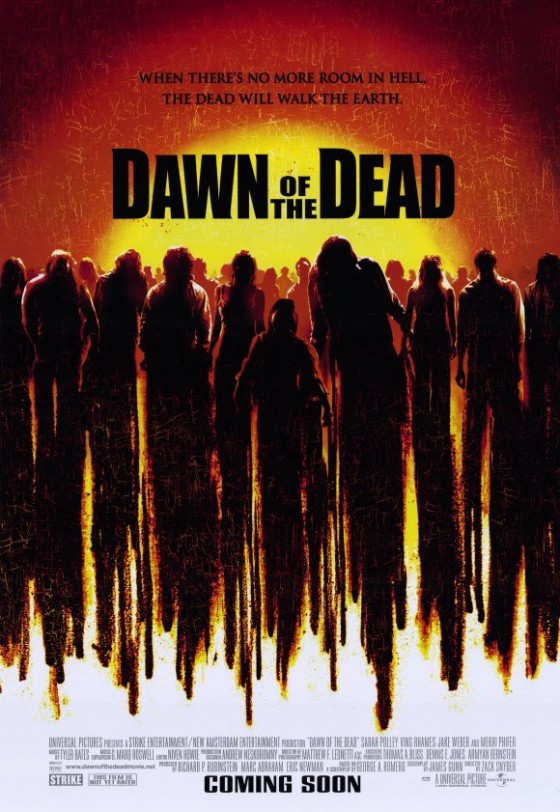
Dawn of the Dead (2004) - film: - As I Lay by Jack E. Peace This piece of fan fiction is a poem written from the point of view of Ana, the main character in the 2004 version of the film Dawn of the Dead. The poem is set during the point in the film where a handful of survivors of the zombie apocalypse have taken shelter in a mall. The first day of the frantic outbreak is coming to an end, and Ana reflects on the current situation and trying to make sense of it all, the husband she has lost, the numbness she feels and the loss of hope. The placement of this fan fiction within the time frame of the film's plot feels appropriate. The first day has just ended, the character's adrenaline is wearing off, exhaustion has set in, and the mall has been secured, and is now safe. The poem reads as a reflection of Ana's thoughts, and this kind of reflection would only be possible at this stage of the film, when the characters are able to rest. So the writers decision to place the poem into this particular point of the film, is the right one. It adds weight to the believability of the poem. The fact the writer chose to use a rhyming arrangement, confuses the tone of the poem. The poems content is heavy in nature, i.e - fear, the death of her husband, surrounded by creatures, a feeling of hopelessness etc, and the use of rhyme lessens the emotional impact that this kind of content provokes in the reader.
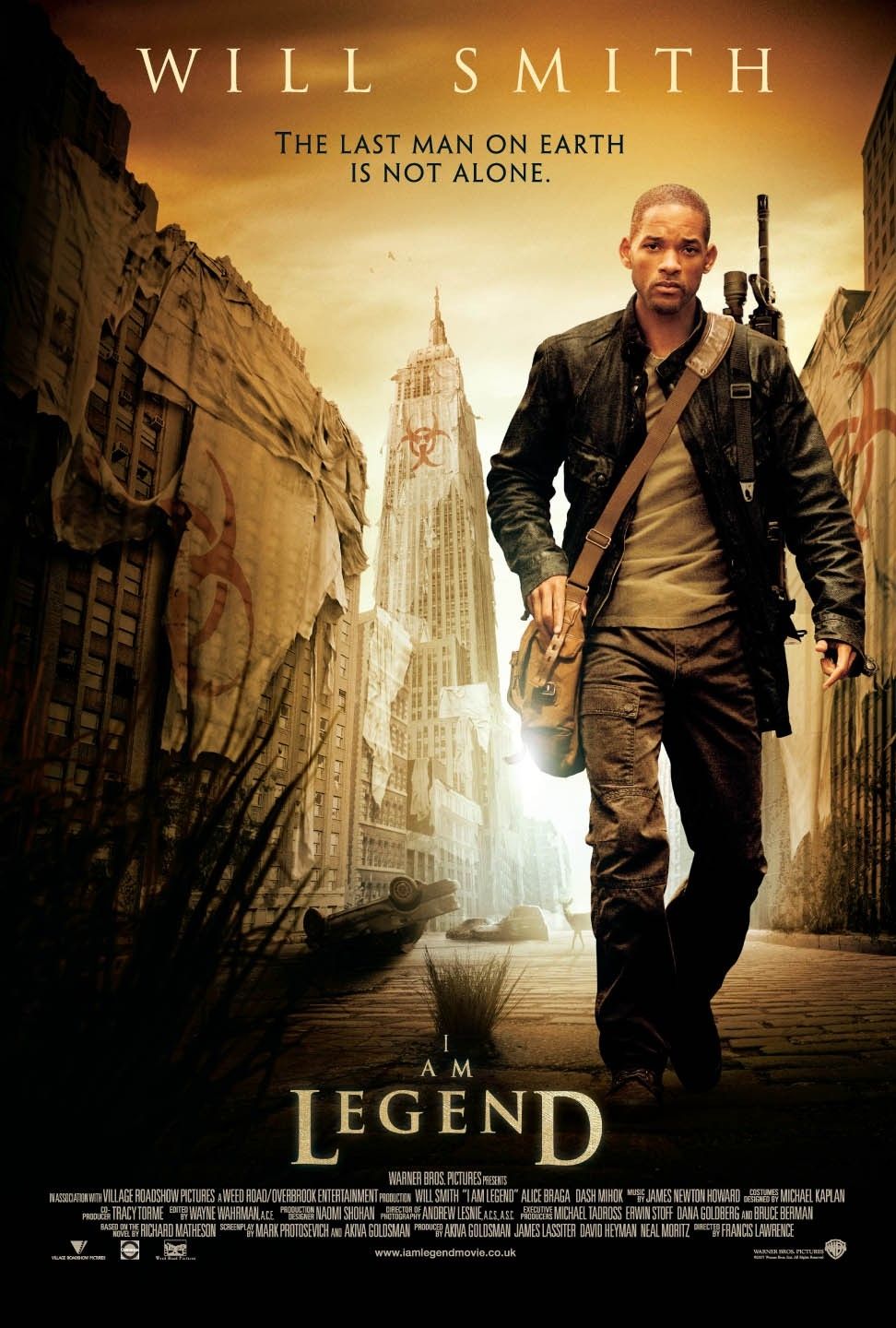
I Am Legend (2007) - film: - Three Little Birds by xHobbiton 'Three Little Birds' is a piece of fan fiction set during the 2007 film I Am Legend. During one scene in the movie, the protagonist Robert Neville is hiding with his dog Sam in his empty bathtub, within his fortified house. Robert is doing his best to be as quiet as possible while hiding from the vampire-like monsters which have wiped out almost all of humanity. This is the scene where the writer's piece of fan fiction is set. The physical action within this piece of fan fiction is relatively minimal. 'Three Little Birds' mainly concerns itself with describing Robert's surroundings, thoughts, memories and state of mind. As a result of this choice, the writer was able to go into further detail when recreating the scene, which in turn paints a clearer picture in the readers mind. The writers aim and intention here is obviously to capture what Robert experiences throughout this scene, and the syntactic word choices made, and high level of detail are effective in communicating his experience. I believe the writer could of made Robert's experience even more believable if the piece was written with a first person point of view, rather than a third person. A first person POV would have added more fuel to the themes of loneliness and isolation, which are evident throughout both the film and this piece of fan fiction.


__CastAway(8).jpg)
Liam FernandezSeptember 27, 2013 at 7:42 PM